
Powder-Coated Steel vs. Stainless Steel for Battery Energy Storage Enclosures
Time : Jul 31, 2026 View : 45
A battery energy storage enclosure does more than keep rain and dust away from electrical equipment. It carries heavy battery modules. It supports cooling hardware. It protects cables and busbars. And it stays exposed to the same environment for years.
The choice of material affects nearly every part of that job.
Powder coated steel is widely used. It is strong. It is economical. And it is easy to fabricate. Stainless steel costs more. But it brings corrosion resistance that does not depend entirely on an applied coating. The better option depends less on marketing claims. It depends more on where the enclosure will operate. It depends on how it will be maintained. And it depends on how long it is expected to remain in service.
What Requirements Should a Battery Energy Storage Enclosure Meet?
A BESS enclosure must remain structurally stable. It must protect sensitive components from moisture. It must guard against dust. It must handle temperature changes. It must resist salt. And it must stand up to industrial contaminants.
Corrosion protection is only one part of the specification. Engineers also need to consider drainage. They need to think about sealing. They need to look at ventilation. They need to account for thermal expansion. They need to check lifting points. They need to plan maintenance access. And they need to meet the required IP or NEMA rating.
How Does Powder-Coated Steel Perform in BESS Enclosures?
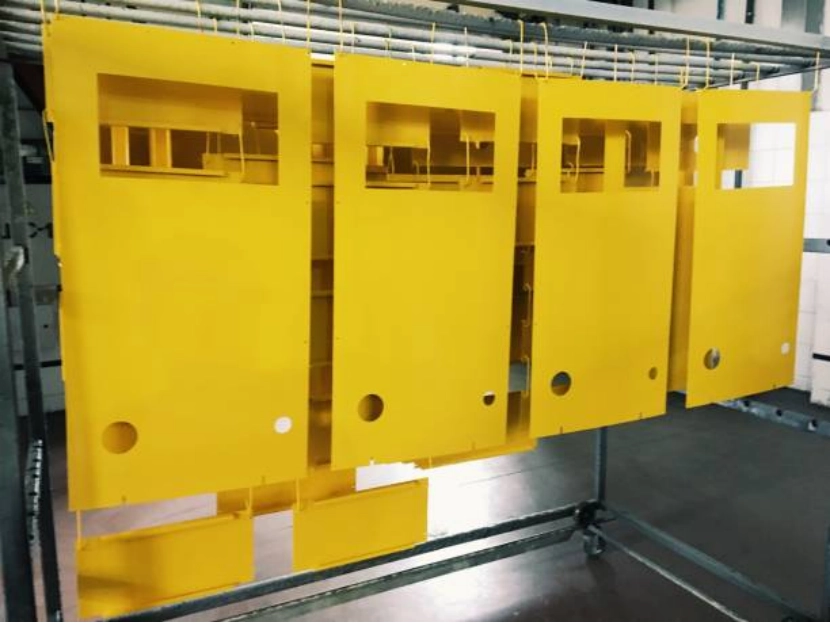
Powder–coated steel usually starts with carbon steel or mild steel. The fabricated parts are cleaned. They are pretreated. They are coated with electrostatically charged powder. And they are cured in an oven.
Its main attraction is practical. The material is readily available. It is structurally strong. And it is suitable for laser cutting. It works for bending. It suits welding. It fits riveting. And it handles machining. Large cabinets can be produced without pushing the material cost too far.
The finish is also flexible. Manufacturers can specify different colors. They can choose textures. They can pick gloss levels. And they can meet branding requirements. For equipment installed near commercial buildings that can matter more than engineers sometimes expect.
How Does Stainless Steel Perform in BESS Enclosures?
Stainless steel relies on a chromium rich passive layer for corrosion resistance. It does not need an external coating to provide basic protection. It may still be painted or powder coated for appearance though.
Grade selection matters. 304 stainless steel is often suitable for general industrial and outdoor environments. Coastal sites may need something more. High chloride locations may require it too. And some chemical facilities may justify 316 or 316L.
It is not maintenance free. Chloride exposure can still produce pitting. It can cause tea staining too. Weld heat tint may reduce corrosion performance. Embedded carbon steel particles can do the same. And contamination from shared tooling may also reduce corrosion performance.
How Do Powder-Coated Steel and Stainless Steel Compare?
The practical differences usually come down to corrosion exposure. They relate to initial cost. They involve maintenance access. And they connect to finish requirements.
|
Comparison factor |
Powder coated steel |
Stainless steel |
|
Initial material cost |
Generally lower |
Generally higher |
|
Corrosion resistance |
Depends on pretreatment and coating condition |
Inherent corrosion resistance; grade dependent |
|
Structural rigidity |
High and cost effective for large structures |
High, though material cost may limit thickness |
|
Damage behavior |
Deep scratches may expose carbon steel |
Scratches usually do not remove basic protection |
|
Finish options |
Wide range of colors and textures |
Brushed, polished, passivated, or coated |
|
Fabrication |
Familiar and relatively economical |
Requires cleaner tooling and tighter process control |
|
Maintenance |
Coating inspections and touch up may be needed |
Usually less coating related maintenance |
|
Typical use |
Indoor and moderate outdoor environments |
Coastal, humid, chemical, or hard to access sites |
|
Lifecycle cost |
Lower entry cost, potentially higher maintenance |
Higher entry cost, potentially lower maintenance |
Powder coated steel often wins the quotation comparison. Stainless steel may win when the calculation includes fifteen or twenty years of exposure. It may win with difficult access. And it may win when the cost of taking equipment offline is considered.
Which Material Is Better for Different BESS Installation Environments?
An indoor cabinet in a controlled electrical room has little in common with an enclosure installed beside the sea.
Indoor and Controlled Environments
Powder coated steel is normally the sensible choice for indoor battery rooms. It works in warehouses. It fits factories. And it suits climate controlled facilities.
The enclosure still needs proper grounding. It requires ventilation. It needs structural support. And it must have fire safety provisions. But severe atmospheric corrosion is less likely. Spending heavily on stainless steel may add little practical value.
Standard Outdoor Installations
Properly prepared powder coated steel performs well in many outdoor BESS projects.
The key word is properly.
Panels should shed water rather than collect it. Lower edges need careful treatment. Hinges require attention. Fastener holes matter. Weld seams need care. And roof joints deserve focus. Zinc rich primers may be worthwhile for long service life. Multi layer coating systems may help too.
Coastal, Marine, and Chemically Aggressive Locations
Stainless steel often 316 or 316L is usually the safer choice near coastlines. It fits ports. It works in chemical plants. And it suits other high corrosion environments.
The higher material cost can be uncomfortable during procurement. Repainting a large energy storage enclosure at a remote coastal site is more uncomfortable.
Even stainless steel needs correct detailing. Water traps cause trouble. Incompatible fasteners create issues. Chloride deposits lead to problems. And contaminated welds still cause trouble. Material grade helps. But it does not replace good engineering.
Which Option Provides the Better Total Lifecycle Cost?
Powder coated steel generally costs less to purchase and fabricate. For indoor or moderate environments that lower cost often remains an advantage throughout the enclosure’s life.
The calculation changes when maintenance becomes difficult.
Touch up work belongs in the cost model. Rust removal does too. Recoating matters. Replacement panels count. Site labor adds up. And downtime must be included. These expenses are often ignored. They do not appear in the original fabrication quotation.
Stainless steel makes more sense when the enclosure will operate in a corrosive location. It fits when it will remain outdoors for many years. And it works where maintenance crews cannot reach it easily.
How Should You Choose the Right Material for Your BESS Enclosure?
Start with the environment not the material price.
Define whether the system is indoors or outdoors. Check humidity. Look at rainfall. Examine airborne salt. Consider chemical exposure. Review washdown requirements. And assess expected temperature variation. Confirm the design life. And decide whether technicians can inspect the cabinet regularly.
The enclosure rating also matters. IP or NEMA performance depends on gaskets. It relies on doors. It involves seams. It includes cable entries. It needs drainage. And it depends on assembly quality not just sheet material.
Whether you need powder-coated steel enclosures, stainless steel assemblies, or fully customized BESS metal fabrication solutions, contact Deshibo Machinery today to discuss your next project and get professional manufacturing support.
FAQ
Q: Is powder coated steel suitable for outdoor battery enclosures?
Yes provided the steel receives proper pretreatment. It needs sufficient coating coverage. It requires protected edges. And it must have a drainage conscious enclosure design. Regular inspection is advisable in wet or humid environments.
Q: Is 304 stainless steel enough for coastal BESS projects?
Sometimes but 316 or 316L is generally preferred where salt exposure is significant. The final choice should reflect distance from the coast. It should consider chloride concentration. It needs to account for maintenance frequency. And it must match the required service life.
Q: Can stainless steel battery enclosures still be powder coated?
Yes. Stainless steel may be powder coated for color. It can serve branding. It may reduce glare. Or it can provide additional surface protection. Surface preparation must be compatible with the selected coating system.
Q: Which material is easier to weld?
Carbon steel is generally easier and less expensive to weld. Stainless steel requires more control over heat input. It needs care with distortion. It demands attention to contamination. And it calls for post weld cleaning.
Q: Does stainless steel guarantee a longer enclosure life?
Not automatically. Correct grade selection still determines actual service life. Fabrication quality matters. Joint design is important. Drainage counts. Fasteners play a role. And environmental exposure decides the outcome.
