
Best Metals for Laser Cutting: A Material Selection Guide
Time : Aug 13, 2026 View : 74
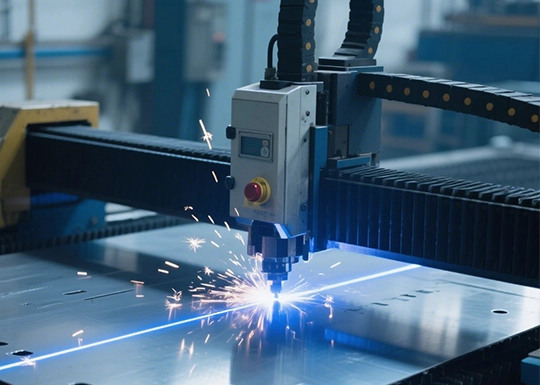
Picking a metal for laser cutting means more than just going for the cheapest sheet. The material has an impact on cutting speed. It changes edge quality. It affects corrosion resistance. The material also influences bending behavior. It has an effect on welding requirements. In the end it changes the final assembly cost.
The best metals for laser cutting are carbon steel, stainless steel, aluminum, copper, and brass. Each behaves differently under the laser beam, so a material suited to a structural bracket may be a poor choice for an outdoor enclosure or an electrical component.
Why Material Selection Matters in Laser Cutting
Laser cutting is a process that uses heat. A focused beam warms a narrow area. An assist gas then clears molten material from the kerf. Several basic factors shape how stable the cut stays and how good the edge looks. These include how much light the metal reflects. They cover how fast it carries heat. The mix of alloys matters too. So does the thickness and the condition of the surface.
The material choice also shapes the steps that come after. A flat piece may still need bending. It could require welding or grinding. Coating and assembly often follow. Low cost steel can turn out expensive. This happens when it needs many steps for corrosion protection. Aluminum can cut down on weight. It can also reduce the work needed for finishing.
The right choice depends on the part itself. It should not focus only on the cutting step.
Quick Comparison of Common Laser Cutting Materials
| Material | Main Advantage | Main Limitation | Typical Applications |
| Carbon steel | Strong and economical | Needs corrosion protection | Frames, brackets, machine parts |
| Stainless steel | Corrosion resistant | Higher material cost | Cabinets, food and medical equipment |
| Aluminum | Lightweight | High thermal conductivity | Enclosures, transport and electronics |
| Copper | Excellent conductivity | Reflective and expensive | Busbars, terminals, thermal parts |
| Brass | Good appearance | Higher cost than steel | Fittings, panels, decorative parts |
Modern fiber laser systems can process mild steel, stainless steel, aluminum, copper, and brass. The practical thickness range and edge quality still depend on machine power, assist gas, alloy, and part geometry.
Carbon Steel: Best for Strength and Cost Efficiency
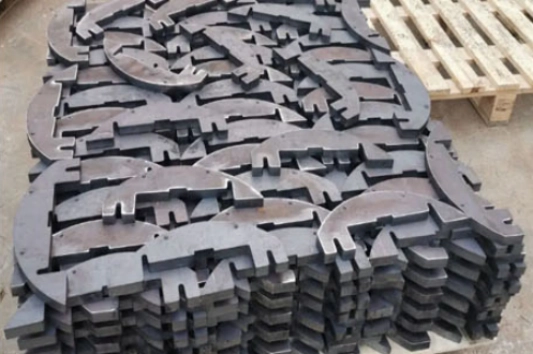
Carbon steel, including common mild-steel grades, is often the first choice for brackets, frames, machine guards, support plates, cabinets, and welded structures. It offers good strength, predictable forming behavior, wide availability, and a competitive material cost.
Oxygen is commonly used as the assist gas because it supports the cutting reaction and improves productivity in thicker plate. The trade off is an oxide layer on the cut edge. If the part will be welded or powder coated, edge preparation may be required.
Nitrogen can produce an oxide free edge, although cutting cost may increase. This is useful for visible components or parts moving directly into coating.
Carbon steel’s main weakness is corrosion. Indoor parts may only need paint or powder coating, while outdoor products may require galvanizing or a specified coating system. Where weight is not critical, carbon steel is usually the most economical structural option.
Stainless Steel: Best for Corrosion Resistance
Stainless steel fits components that face moisture. It works with cleaning chemicals or food processing environments. Outdoor service is another common use. Nitrogen cutting produces clean edges on it. The process avoids the oxide scale linked to oxygen cutting.
Grade 304 works for many cabinets. It suits covers, control panels, and general industrial parts. Grade 316 is the usual selection where chloride exposure or strong chemicals raise the corrosion risk.
Its purchase price sits above carbon steel. Total service cost can stay lower. This is because painting or galvanizing may not be needed. Brushed or polished sheet demands careful handling. Cosmetic assemblies may set limits on scratches. They also limit weld discoloration and grinding marks.
Aluminum: Best for Lightweight Components
Aluminum is widely used for electronic enclosures, transportation equipment, robotic systems, access panels, and moving machine components. Its main advantage is low density. Replacing steel with aluminum can reduce product weight, although the design may need thicker material or additional bends to maintain stiffness.
Aluminum reflects more laser energy and conducts heat faster than carbon steel. A correctly configured fiber laser handles these characteristics well, but cutting parameters must match the alloy and thickness. Poor settings can cause burr or an unstable edge.
The alloy must also suit downstream operations. Some grades bend easily, while others are more likely to crack at a tight radius. Welding behavior also varies, so the grade should be selected for cutting, forming, and joining as one process chain.
Aluminum has useful corrosion resistance. Anodizing improves surface hardness and appearance, while powder coating is common for colored enclosures.
Copper and Brass: Best for Electrical and Specialized Parts
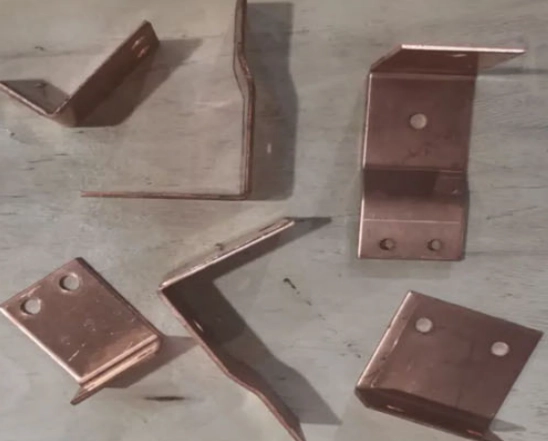
Copper is chosen mainly for electrical and thermal performance. Common laser cut parts include busbars, terminals, grounding components, and heat transfer elements. Brass is used for electrical fittings, instrument components, decorative panels, and parts requiring an attractive corrosion resistant surface.
Both metals are reflective. Industrial fiber lasers can process copper and brass, provided the equipment, power level, and cutting parameters are suitable.
Because these materials are expensive, nesting efficiency can noticeably affect the quotation. For electrical parts, the drawing should state whether an edge will be plated, deburred, bent, or used as a contact surface.
How to Choose the Right Metal for a Laser Cut Part
Start with the operating environment. Coated carbon steel may be sufficient indoors. Stainless steel is safer for washdown, humid, or corrosive conditions. Aluminum is useful where weight matters, while copper is justified when conductivity is required.
Next, check strength and stiffness. A panel’s performance depends not only on material strength but also on thickness, flange length, bends, ribs, fastener locations, and unsupported span. A formed thin sheet can be stiffer than a thicker flat plate.
Thickness and tolerance should be reviewed together. Small holes, narrow slots, and closely spaced contours become more difficult as sheet thickness increases. Critical dimensions should be identified clearly instead of applying an unnecessarily tight tolerance to every feature.
Finally, consider downstream manufacturing. The metal must bend without cracking, weld without unacceptable distortion, accept the required finish, and assemble correctly. An early design for manufacturing review is far less expensive than correcting completed parts.
Common Material Selection Mistakes
A frequent mistake is choosing the cheapest sheet without considering corrosion protection, welding labor, or product life. Another is changing grades without checking bendability or welding requirements.
A useful request for quotation should identify the material grade, thickness, quantity, finish, critical tolerances, weld requirements, and cosmetic surfaces. When the grade is not fixed, provide the operating requirements and allow the manufacturer to suggest an alternative.
Laser Cutting and Fabrication at Deshibo Machinery
Deshibo Machinery provides laser cutting as part of a wider fabrication workflow that includes bending, machining, welding, riveting, surface treatment, assembly, and inspection. Its published laser cutting capabilities cover stainless steel, copper, steel, and aluminum, while its wider services also include mild steel and brass.
This matters because a material should be confirmed against the entire manufacturing route. A sheet may cut well but still require a different grade, thickness, bend radius, weld detail, or coating specification to perform correctly.
For an accurate review, send the CAD file with the material grade. Add thickness, quantity, tolerance, surface finish, and application environment. This information lets the engineering team check how easy the part is to produce. They can then quote the actual part.
Frequently Asked Questions
Q: What Is the Easiest Metal to Laser Cut?
Carbon steel and stainless steel rank among the most established materials for industrial laser cutting. Real difficulty depends on thickness. Grade matters as well. So do assist gas, machine power, and required edge quality.
Q: Can Aluminum Be Cut With a Laser?
Yes. Fiber laser systems routinely cut aluminum sheet. Stable results depend on suitable machine settings. Material quality plays a part. The alloy and its thickness are important too.
Q: Can Lasers Cut Copper and Brass?
Yes. Modern fiber lasers can cut both materials. Reflective metals require appropriate equipment. Process control must be good as well.
Choose the Material for the Finished Product
Carbon steel usually serves as the best starting point for strength and cost. Stainless steel is preferred for corrosion resistance. Aluminum fits low weight needs. Copper is selected for conductivity. Brass suits specialized electrical or cosmetic parts.
The final choice must account for cutting, bending, welding, finishing, assembly, and the service environment. Share your drawing and application requirements with Deshibo Machinery. The team will provide a review for production and a project specific laser cutting quotation.
