
304 vs. 316 Stainless Steel for Outdoor Enclosures
Time : Oct 22, 2026 View : 1
For an outdoor application in a low-salt environment, 304 stainless steel is a typical solution. When however sea spray or road salt gets to fall on the cabinet, 316 should be given more consideration. The key to selection is what will land on the metal and stay there.
A useful point of comparison for 304 stainless steel versus 316 stainless steel is where the cabinet will be used. A cabinet left at a warehouse could look the same as one made with 316 stainless steel for custom industrial enclosures’ outdoor use. But not after they have been in service for a while on a waterfront.
What Makes 316 Stainless Steel Different from 304?
The useful difference is molybdenum. This alloying element helps 316 resist the localized attack that chlorides can cause. Chlorides arrive through sources such as sea salt. Instead of rust spreading evenly across a panel, small pits can develop at vulnerable spots.
The steelmaker data helps to clarify the difference between typical and specified compositions. Typical compositions for Outokumpu’s Core 304/4301 and Supra 316L/4404 grades are given below as percentages by mass. These figures describe the particular products listed, not products bearing these trade names that may be produced to different compositions.
|
Typical Composition |
Core 304/4301 |
Supra 316L/4404 |
|---|---|---|
|
Chromium |
18.1% |
17.2% |
|
Nickel |
8.1% |
10.1% |
|
Molybdenum |
2.1% |
Observe the chromium contents stated in the examples for 304 and 316L. While the example for 304 actually contains more chromium than the example for 316L, the molybdenum in 316L gives it a significant advantage in resisting attacks by chlorides. If one only compared chromium, one would be misled.
The “L” denotes low carbon. Although this is a significant point when considering welding of the material, it does not constitute a completely different salt resistance classification. This will be covered later.
When Does an Outdoor Enclosure Need 316?
The most important factor to consider for selecting a finish would be the installation location. A coastal location is known, but the degree to which the cabinet will be exposed is far more relevant.
Inland Sites with Little Salt Exposure
Outokumpu recommends material 304 for outdoor use in rural and urban environments with low risk of chloride contamination. This material can also be used for a control cabinet at an inland warehouse, exposed to normal weather.
Spending money on 316 here might not deliver any real value if there’s no salt and the cabinet shape does a good job of coping with rain. I’d focus on getting door fit and surface finish right before moving to a higher grade of alloy. The equipment is outside.
Inland doesn’t necessarily mean salt-free. Cabinets next to winter-treated roads can receive the splash of salt from cars traveling down the road. This is a material issue.
Coastal Equipment and Roadside Salt
Two identical control boxes for a port are shown here: one is placed inside a sheltered operations building, the other is controlling equipment on an open quay. The same drawings could have been produced for the two examples, but the exterior surfaces would have to withstand different influences.
For the quay installation, 316 is a more suitable starting point as the molybdenum in this grade will protect against chloride exposure. Similarly, the occasional washing down of roadside equipment with de-icing salt would also be better handled with 316.
This also applies to the interpretation of shelter such as a canopy. Even though it protects against rain, it does not prevent airborne particles to fall down on surfaces underneath, such as the floor in front of the cabinet or behind an external bracket. There is no one-size-fits-all solution for a distance from the coast.
Which Fabrication Details Matter for Stainless Enclosures?
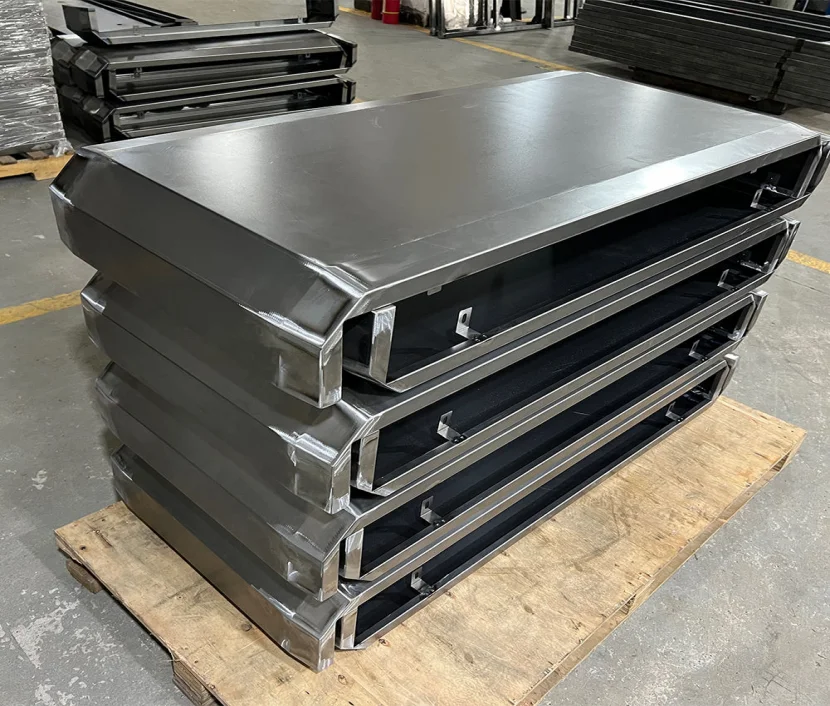
Suitable grade still requires suitable cabinet design. Two points to consider prior to fabrication: areas within cabinet that hold salty moisture and surfaces that will have undergone fabrication.
Shape the Cabinet to Shed Water
The horizontal water retaining surface of the slab can be made as wide as desired. A tight overlap is important as water may penetrate into the joint behind the exposed surface and it is well known that the concentration of chlorides and the local geometry of the crevice can influence the tendency for localized corrosion to occur.
Review the external contours when planning the cutting and bending of the sheet metal for the enclosure. A sloping top or revised bracket can often provide a satisfactory means for water to drain from the exterior surface of the enclosure. The means for water to drain from the exterior of an enclosure must be compatible with the required sealing of the enclosure and random openings should not be created which become problems.
Here a small drawing change could be more effective than a note saying “corrosion resistant”.
Specify the Finished Welded Surface
Even after cutting and joining, surfaces are not left untouched. Cutting carbon steel can transfer steel particles and create rust spots, whereas welding creates heat tint which must be removed in the correct manner to return the surface to its normal corrosion performance.
Specify post weld finish for stainless steel fabrication. Do not use carbon steel abrasives on stainless steel. Define method for removing weld discoloration from stainless steel parts and confirm if passivation is required.
Just because a seam looks smooth does not necessarily answer all your questions. Nor does passivation change 304 to 316. The underlying alloy remains the same.
Choose the Enclosure Grade Around the Installation
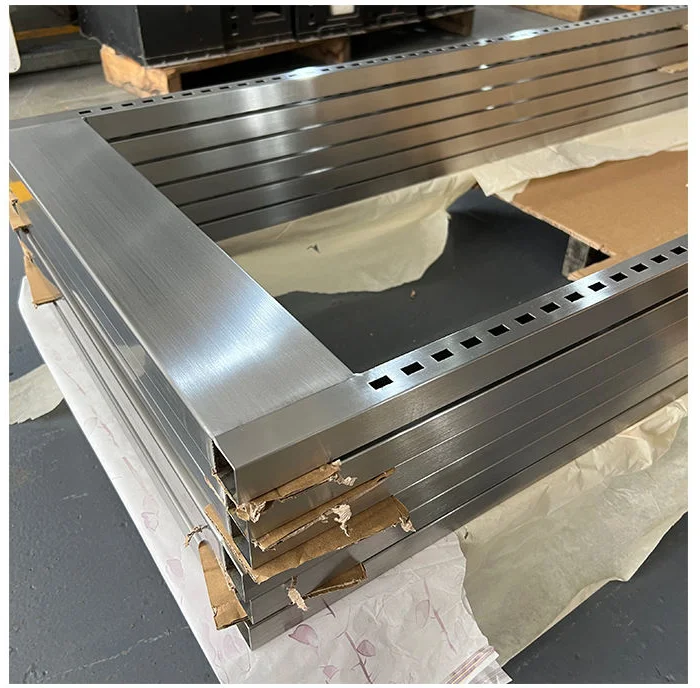
For sites with very low chloride exposure, we’d like to keep 304 in the running. For sites where salt exposure is a significant part of the job, we’d like to give 316 priority. Then look for details that could trap moisture.
Mark out the exposed faces of your proposed enclosure design on a sketch and consider where the main salt sources will be and any recesses that will be sheltered by the design. This simple task will then give you a reason for the choice of material that you can justify to others.
FAQ
Does 316 Stainless Steel Make an Enclosure Waterproof?
Water exclusion depends on the assembled form of the housing including all seals and openings. A higher alloy grade of steel is of no use if a door leaks. Ingress protection should be specified separately from the grade of stainless steel.
Is 316L Better Than 316 for a Welded Enclosure?
316L is often preferred because its lower carbon content reduces susceptibility to intergranular corrosion after welding. Outokumpu lists a maximum carbon content of 0.03% for 316L under ASTM A240. The benefit concerns welding; it does not make the cabinet immune to salt.
Can 316 Stainless Steel Still Corrode near the Sea?
Yes. High coastal chloride contamination can cause pitting and discoloration also on 316L. Splash of seawater or formation of crevices where salts can trap may require a more resistant material. The term “marine grade” does not promise unlimited corrosion resistance.
Can Thicker 304 Sheet Replace 316?
Adding extra thickness to a panel can help to meet the structural requirements of the cabinet. However, this does not add molybdenum to form 316 or provide 304 with any chloride resistance. Thickness must be chosen for mechanical reasons, and grade chosen for environmental reasons.
