
Prototype vs Mass Production: What Changes in Manufacturing?
Time : Jun 25, 2026 View : 41
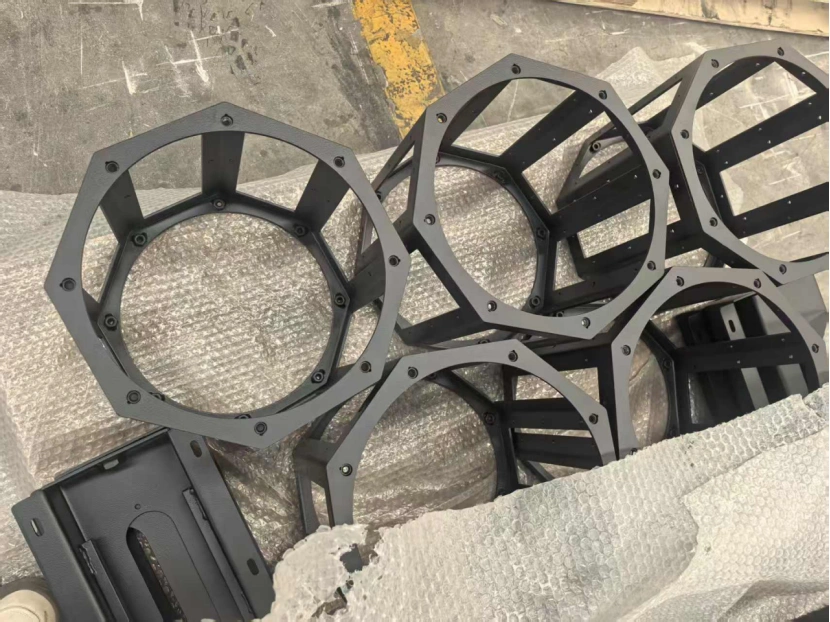
The transition from a prototype to mass production is seldom straightforward. It represents a careful balance. Engineers must weigh creative ideas against strict control. They must compare possible designs with practical realities. During steel sheet fabrication, this major shift changes everything. It alters how engineers approach process design. It also affects tooling and material choices.
Why Does Manufacturing Change from Prototype to Mass Production?
Prototype fabrication focuses heavily on exploration. Engineers evaluate various geometries. They also test different weld sequences and surface finishes. This helps them discover the most effective solutions. At this early stage, each part might look slightly different. Flexibility holds more value than strict consistency right now. After a design proves successful, the focus shifts. Attention moves toward repeatability and overall efficiency. The main objective fundamentally changes. The team stops trying to build just one perfect item. Instead, they aim to produce thousands of identical units without any deviation.
How Does Precision Sheet Metal Fabrication Adapt in This Transition?
Precision sheet metal fabrication becomes much less experimental. It turns into a highly procedural task as production volumes grow. Tolerances become significantly tighter. Technicians rework the CNC programming to maximize speed. They shorten the tool paths. They also minimize the pierce points. Finally, they rearrange cutting sequences to guarantee minimal material waste.
Engineers design these new fixtures for very specific operations. These tasks include bending, welding, or assembly alignment. Each dedicated tool ensures strict consistency during much faster production cycles. Consequently, the overall rhythm of the shop floor changes.
Design and Engineering Adjustments Between Phases
A feature might look incredibly elegant on a CAD model. However, that same feature could prove very costly or slow. This becomes obvious when a manufacturer multiplies the process by thousands of units.
What Design Modifications Are Needed Before Scaling Up?
Feedback from initial prototype runs often reveals hidden weak points. For example, holes might misalign during final assembly. Certain bends might demand extra manual handling time. Engineers simplify complex geometries wherever possible. They remove unnecessary contours. They also eliminate extra weld seams that typically slow down fabrication. Even minor adjustments make a huge difference. A simple 1 mm shift in a hole pattern helps. Choosing a different bend radius also works well. These small changes can dramatically reduce setup time during mass production.
The Role of DFM (Design for Manufacturability) in Sheet Metal Projects
Design for Manufacturability (DFM) effectively bridges creative design with strict production constraints. This approach encourages early collaboration. Designers and fabricators work together from the start. As a result, potential issues surface well before anyone cuts any metal. DFM carries specific meanings in precision sheet metal fabrication projects. It means optimizing laser cutting paths to minimize scrap. It involves adjusting bend allowances based on actual tooling performance. It also requires sequencing welds carefully to prevent material distortion.
Process Optimization for Large-Scale Production
The next major challenge involves throughput. Managers must determine how fast each operation can run. They also must ensure high efficiency without losing any precision.
What Changes in Steel Sheet Fabrication When Moving to Volume Production?
Manual setups quickly give way to advanced automation. Automated laser cutting systems handle nested sheets continuously. They require very minimal operator input. Batch processing replaces standard one-off handling methods. Parts move steadily through bending cells. They also pass through robotic weld stations in highly predictable cycles.
Quality control procedures also scale up significantly. Inspectors no longer check every single piece manually. Instead, statistical sampling ensures strict dimensional accuracy. This modern method saves valuable time. Consistency transforms into objective, measurable data. It no longer relies on subjective human judgment.
How CNC Machining Parameters Evolve During Scale-Up
CNC machining shifts its primary focus. It moves away from flexibility and prioritizes endurance. Programmers refine the tool paths carefully. They aim to shave valuable seconds off each cycle. They do this without compromising any accuracy. Cutting speeds increase noticeably. Advanced tool coatings and better cooling strategies make this possible. These improvements ensure strong reliability under continuous production loads.
Predictive maintenance becomes absolutely vital. Machines must run for long hours. They cannot suffer from unexpected downtime. Special sensors track spindle vibration constantly. They also monitor ongoing temperature trends. Because of this data, technicians can intervene quickly. They fix problems before a complete equipment failure occurs.
Quality Control and Cost Efficiency Considerations
Mass production simply does not forgive inconsistency. One very small drift can cause major problems. It can easily multiply into hundreds of defective parts.
Maintaining Precision in Mass Production Environments
Statistical Process Control (SPC) replaces outdated manual inspection logs. It uses real-time data charts instead. These digital charts flag process deviations instantly. Coordinate Measuring Machines (CMMs) verify critical tolerances automatically. They perform these checks right after every single batch run. Welding quality strictly follows documented procedures. Operators use controlled parameters like current flow and travel speed. There is absolutely no room for improvisation once production volume increases.
Balancing Cost Efficiency with Product Quality
Cost control is not just about buying cheaper materials. It is really about the smarter use of those resources. Efficient nesting strategies help during laser cutting. They minimize scrap rates effectively. Software fits parts together like puzzle pieces on each steel sheet. Bulk sourcing definitely lowers the overall unit cost. However, it demands careful supplier evaluation. A manufacturer must maintain consistent material properties across all incoming shipments.
Continuous improvement programs keep operations extremely lean over time. Engineers might make small tweaks in the fixture layout. They might also adjust the tool change scheduling. These minor updates can yield highly measurable savings over long production runs.
Partnering with Deshibo Machinery
Deshibo Machinery stands out as an exceptional manufacturing partner. The company successfully bridges prototyping flexibility with mass-production discipline. It offers completely integrated services. These include CNC machining, bending, welding, and surface finishing. These comprehensive services streamline complex supply chains.
Deshibo Machinery maintains extremely high-quality standards across every stage. They manage the entire manufacturing transition smoothly. This journey goes from initial concept validation right through to full-scale delivery. The team ensures both performance reliability and impressive cost efficiency.
They tailor everything precisely to exact client specifications. This dedicated approach enhances overall project outcomes. It supports various industries that demand precision sheet metal fabrication expertise. Contact Deshibo Machinery for your machining solutions and to build reliable systems.
FAQ
Q1: What’s the biggest challenge when moving from prototype to mass production?
Maintaining the original design intent presents a major challenge. Teams must adapt processes for strict repeatability. Balancing initial creativity with practical manufacturability is difficult.
Q2: Why do material choices change between stages?
Prototype materials prioritize rigorous performance testing. In contrast, mass production materials focus on a different balance. They weigh cost efficiency against required mechanical properties. These essential properties include overall strength and corrosion resistance.
Q3: How does automation impact quality control?
Automation greatly improves overall consistency. However, it does not completely eliminate essential human oversight. Data-driven monitoring plays a huge role. It ensures that machines stay within strict tolerance limits over very long runs.
Q4: What role does DFM play early in projects?
DFM prevents incredibly costly redesigns later on. It aligns the basic product geometry with actual fabrication capabilities. This crucial alignment happens well before full production begins.
Q5: Why choose Deshibo Machinery for both prototyping and mass production?
Their fully integrated approach significantly reduces common transition risks. The engineering team understands the entire process deeply. They know exactly how early design decisions affect long-term scalability later on.
