
Custom Heavy-Duty Steel Brackets: Design, Load Capacity, and Manufacturing Tips
Time : Jul 10, 2026 View : 35
Engineering Principles for Custom Steel Bracket Design
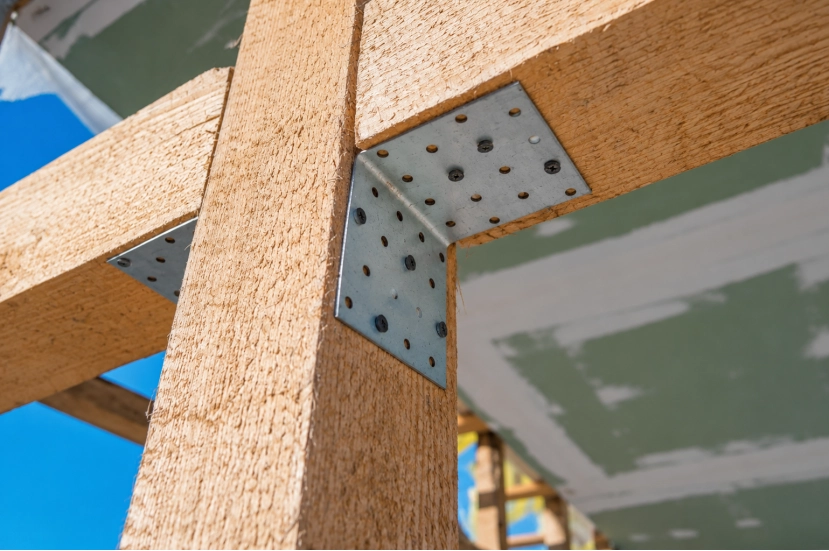
Designing a heavy duty steel bracket isn’t just about making something that looks strong. It’s about understanding how thin plates behave under stress. Thin plates refer to steel plates whose thickness is much smaller than their length and width. Because it has poor lateral bending resistance, it is not suitable for occasions where lateral bending loads are applied. This reality forces us to think deeply about material selection and structural geometry before the first cut is even made.
Selecting the Right Steel Grade for Structural Integrity
When choosing between carbon steel and stainless steel, the environment dictates the winner.
Carbon steel is the workhorse of the industry, but without protection, it’s a rust magnet.
Stainless steel offers built-in resistance but comes at a premium.
Beyond just the type of metal, the yield strength is what keeps a bracket from permanently deforming under a heavy load. If the stress exceeds the material’s limit, you’re looking at a failure. Thickness also plays a massive role; thin plate components are light in weight, but they can be flimsy. Since the surface quality of thin plates is high and the dimensional tolerance in the thickness direction is small, the plate surface does not need to be processed. This makes them efficient for manufacturing, provided the thickness is sufficient to maintain rigidity under the intended load.
Geometry and Reinforcement Techniques
To make a thin plate act like a thick one, we use geometry. Adding gussets or ribs is a classic move. Usually, grooves are used to increase its stiffness. If you have a large flat surface, it’s prone to buckling. The basic principle of groove arrangement is to avoid straight through areas without grooves. This breaks up the “inertial axis” where the plate wants to fold. Corner radii are equally vital. The outer shape and inner holes of the punching parts should avoid sharp corners. Sharp corners are stress risers—basically invitations for cracks to start.
At the connection of straight lines or curves, there should be an arc connection, and the arc radius R≥0.5t. Strategic hole placement is the final piece; the design of punching holes on the parts should consider leaving appropriate hole edge distance and hole spacing to avoid punching cracks.
How Do You Calculate Load Capacity for Heavy Duty Brackets?
Calculating load isn’t a “one size fits all” formula.
You have to distinguish between a static load—something just sitting there—and dynamic loads, like a vibrating motor or a moving arm.
Dynamic loads are much harder on the material. Then there is the “Lever Arm” effect. If a bracket sticks out far from the wall, the force at the mounting point is multiplied. It’s simple physics, but often overlooked. To be safe, always apply a safety factor.
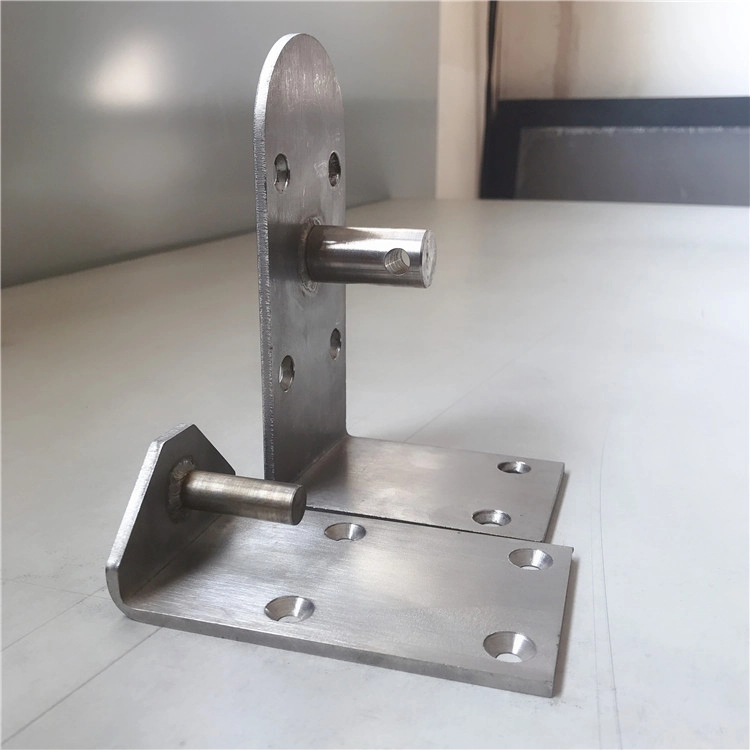
You don’t design for the maximum load; you design for two or three times that. Finally, consider the fasteners. When the punching edge is not parallel to the edge of the part shape, the minimum distance should not be less than the material thickness t; when parallel, it should not be less than 1.5t. This ensures the bracket body doesn’t tear out around the bolts.
Precision Manufacturing Processes at Deshibo Machinery
At Deshibo Machinery, we know that a design is only as good as its execution. Sheet metal parts’ processability refers to the difficulty of parts in punching, bending, and stretching. We aim for high precision to ensure every steel bracket fits perfectly in the field.
Laser Cutting for Tight Tolerances
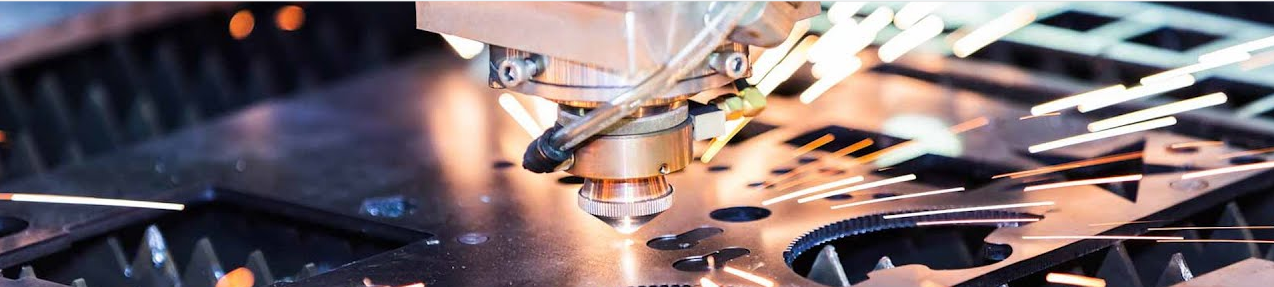
Laser cutting is our preferred method for complex shapes. The simpler the geometric shape of the cutting surface, the more convenient and simple the cutting and blanking, the shorter the cutting path, and the smaller the cutting amount. Fiber lasers allow us to cut through high thickness steel plates with incredible accuracy.
Since thin plates are easy to deform, various forms of components can be manufactured using simple processing techniques. The laser ensures we get those clean edges without the mechanical stress that traditional stamping might introduce.
CNC Bending and the Science of K-Factor
Bending is where the math gets real. You have to account for the K-Factor, which is the shift in the neutral axis of the metal during a bend. The bending edge should be perpendicular to the cutting surface, otherwise the risk of cracks at the intersection increases. We also watch out for springback.
High strength alloys want to return to their original shape after being bent. The radius of the inner fillet of the bent part to the plate thickness being larger results in greater springback. Our CNC machines compensate for this automatically to ensure a perfect 90 degree angle every time.
Structural Welding and Joint Efficiency
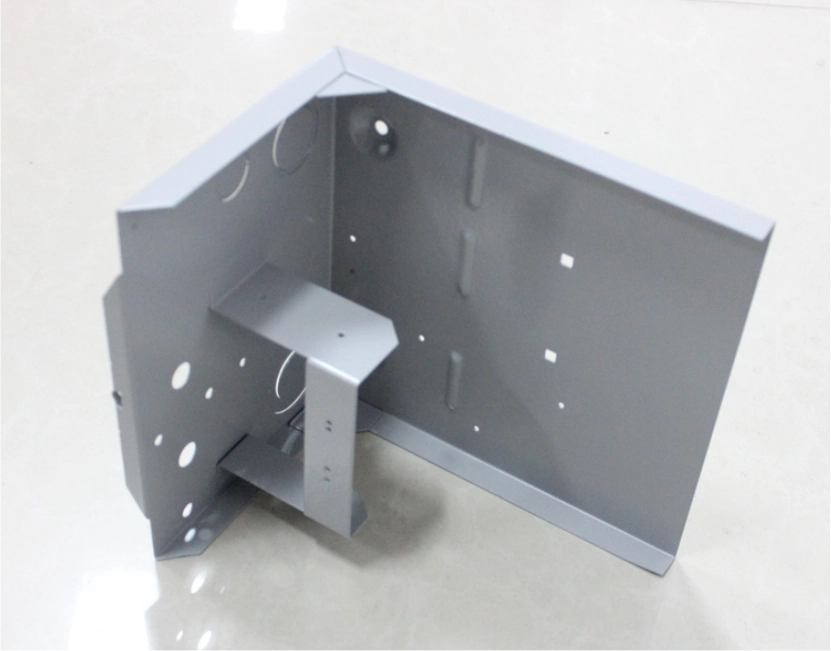
For heavy duty connections, welding is often necessary. When the structure is so complex that bending alone is difficult, composite components can be used, combining multiple simple thin plate components by welding or bolting. We typically use MIG welding for its speed and strength in thick structural steel.
Full penetration welds are critical. If the weld doesn’t go all the way through the joint, you’ve created a built in failure point. The end of the groove has low fatigue strength and is a weak link; if the grooves are connected, some of its ends will be eliminated. This same logic applies to weld placement—avoid ending a weld in a high stress zone.
Common Pitfalls in Custom Bracket Specification
Many engineers fall into the trap of over engineering, adding unnecessary thickness that just drives up cost and weight. Conversely, under engineering leads to field failures. The middle ground is found through careful analysis. Another mistake is forgetting the finish. Zinc is a highly active metal, and appropriate chemical conversion treatment such as phosphate treatment is required before painting.
Without proper galvanization or powder coating, even the best steel bracket will succumb to corrosion. Also, check your clearances. There’s nothing worse than a bracket that fits the part but doesn’t leave room for the wrench to tighten the bolts.
Why Technical Collaboration Improves Manufacturing Outcomes
Working with a manufacturer early on is the best way to save money. We can help transition a rough sketch into a manufacturable DFM (Design for Manufacturing) file. Saving raw materials means reducing manufacturing costs. We look for ways to take the material from the large flat surface and use it for smaller components to minimize waste.
Prototyping is another huge advantage. It’s better to find a failure point on a single test piece than on a production run of a thousand. Good technology should ensure less material consumption, fewer processes, simple mold structure, high service life, and stable product quality. By leveraging our expertise at Deshibo Machinery, you ensure your custom steel bracket is as efficient as it is strong. Contact us today to discuss your custom steel bracket project and get a tailored manufacturing solution built for your application.
FAQ
Q: What is the minimum bend radius for a steel bracket?
A: It depends on the material. When the material thickness is constant, the smaller the inner radius r, the more severe the stretching and compression of the material. Generally, the minimum bending radius should be avoided from being too small to prevent cracks.
Q: Why do my brackets have cracks near the holes?
A: This usually happens because the holes are too close to the edge or the bend. The distance from the hole wall to the bending edge should be A≥4 to prevent deformation.
Q: How can I make a thin bracket stiffer without increasing thickness?
A: Pressing reinforcing ribs in the bending area can not only improve the rigidity of the workpiece but also help suppress springback. Also, avoid straight through areas without grooves to prevent buckling.
