
CNC Machining vs. Sheet Metal Fabrication: Which Should You Choose?
Time : Sep 10, 2026 View : 1
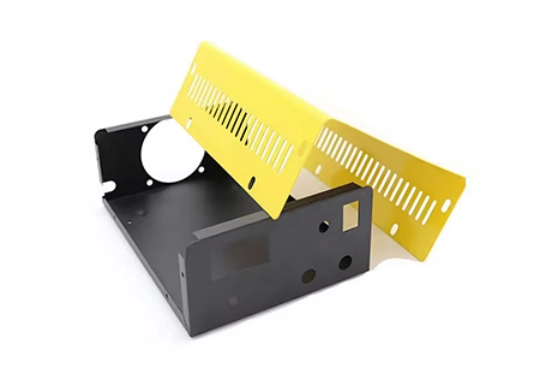
A metal part can look simple on a screen and still create a difficult manufacturing decision. A bracket may be machined from a solid block. It may also be cut by laser before bending and welding. Both routes can work. They differ in cost and weight. Tolerance and assembly behavior differ too.
The useful question is which process suits the part that must ship. Let geometry and material guide the choice. Quantity and critical dimensions matter as well.
CNC Machining vs. Sheet Metal Fabrication: The Quick Answer
Choose CNC machining for solid components with complex 3D features. It suits close tolerances and precision holes. Threads and important mating surfaces also favor machining. Choose sheet metal fabrication for enclosures and panels. Brackets, covers, and frames can often be made from a flat blank.
| Factor | CNC Machining | Sheet Metal Fabrication |
| Starting material | Solid billet or block | Flat metal sheet |
| Typical geometry | Solid, detailed 3D parts | Thin-walled, folded structures |
| Main operations | Milling, turning, drilling | Laser cutting, bending, welding |
| Best fit | Precision components | Enclosures, panels and frames |
A welded enclosure may still need a machined mounting block. The answer can be a process combination.
How the Two Manufacturing Processes Work
The raw material sets the route and affects scrap.
What Is CNC Machining?
CNC machining is subtractive. A cutter removes material from a billet until the shape matches the CAD model. Milling creates pockets and contoured faces. Turning produces shafts and bushings. Drilling and tapping add holes and threads.
Picture a pump adapter with a sealing face, bolt circle, and concentric counterbore. A solid part is straightforward to inspect. Deep pockets and multiple setups can raise the price.
What Is Sheet Metal Fabrication?
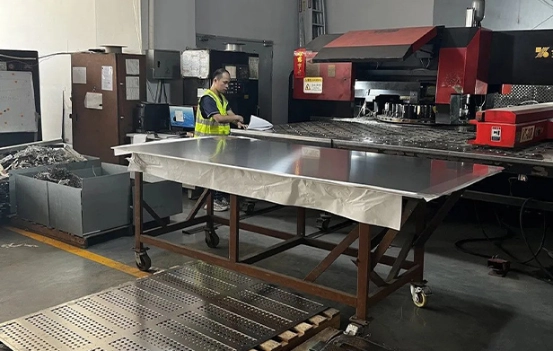
Sheet metal fabrication begins flat. A laser cuts the features. A press brake forms flanges and channels. Metal welding joins pieces that cannot be made in one bend sequence.
This suits a cabinet, machine guard, or bracket. A folded wall adds stiffness without the mass of a block. Bend radius and reliefs matter. Hole position and weld access matter too.
CNC Machining vs. Sheet Metal Fabrication: Key Differences
Both processes can be precise. They control different things.
Part Geometry
CNC handles solid forms, deep pockets, and features on several faces. It suits parts that mate with bearings or seals.
Sheet metal works best with consistent wall thickness. Folded boxes and brackets are efficient. So are trays and frames. Machining a thick enclosure can add weight without useful performance.
Precision and Tolerance
CNC usually gives better control over critical dimensions. Not every surface needs a tight tolerance. Extra decimal places add inspection and cycle time.
Bending introduces springback. Welding can pull an assembly out of square. Identify critical datums and allow sensible tolerances.
Material Use and Part Weight
Machining starts with excess material. A small bracket may generate substantial chips. That can be acceptable for a precision component. It rarely suits a large structure.
Sheet metal uses folds to create stiffness with less mass. Gauge and grade matter. Aluminum reduces weight. Stainless steel suits corrosive environments. Coated mild steel can be economical.
Cost and Production Volume
CNC cost follows machining time, setups, and material removal. A prototype may be economical because no forming tool is needed. A large order changes the calculation.
Fabrication cost follows cutting time and the number of bends. Weld length and assembly labor add to it. A box with ten bends is not automatically cheap. Large panels and lightweight frames often scale well.
Strength, Finishing and Assembly
A machined part can stay solid. A fabricated assembly distributes loads through folds, gussets, and welds. The choice depends on loading and service access.
Finishing changes the decision. Weld appearance matters on a visible enclosure. On a machined part, a sealing face may matter more than other surfaces.
Which Process Should You Choose for Your Part?
Describe the part’s job, then work backward to the process.
Choose CNC Machining When You Need:
-
Tight tolerances or accurately located features
-
Complex 3D geometry
-
Thick or solid components
-
Precision holes and threads
-
Pockets or mating surfaces
-
Functional prototypes or low-to-medium production quantities
A sensor mount with a locating bore is a good example. Machining lets the bore and mounting face be checked directly.
Choose Sheet Metal Fabrication When You Need:
-
Enclosures, covers, or brackets
-
Cabinets or frames
-
Thin walls and relatively uniform thickness
-
Large but lightweight components
-
Bent, welded, or assembled structures
-
Efficient production of repeatable fabricated parts
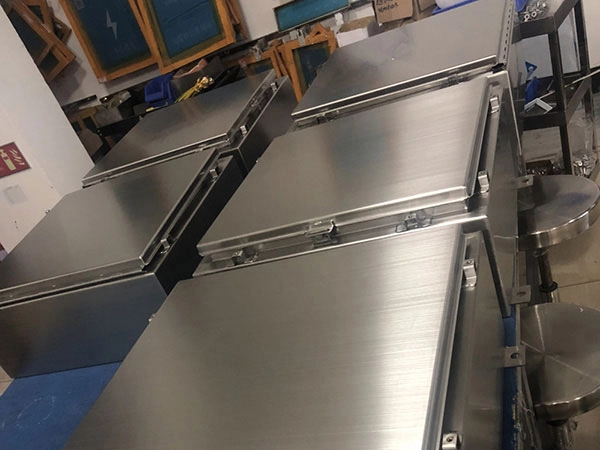
An equipment cabinet needs space and predictable bends. It also needs access panels and a durable finish. Fabrication delivers that with less weight.
Before releasing the drawing, ask:
-
Is the part solid or thin-walled?
-
Which dimensions are critical?
-
Does it require bending or welding?
-
What quantity is needed now and later?
-
Can the geometry be simplified?
When CNC Machining and Sheet Metal Fabrication Work Better Together
Real assemblies often need both routes. A laser-cut and bent chassis can provide the structure. CNC inserts can provide threads and locating surfaces. Welded panels can carry the load while machined interfaces keep a motor aligned.
Define the interfaces before quoting so the assembly is priced as one coordinated build.
What to Include in Your RFQ
An RFQ should show the part and its priorities quickly. Include:
-
3D CAD model and 2D technical drawing
-
Material grade and sheet thickness
-
Critical tolerances
-
Surface finish requirements
-
Prototype and production quantities
-
Intended application
-
Welding, assembly, or inspection requirements
Mark cosmetic faces and functional datums. State the revision. Complete information helps a supplier compare routes without pricing unknown risk.
Discuss Your Project with Deshibo Machinery
Once the drawing is ready, a process conversation is more useful than a generic “best method” rule. Deshibo Machinery works with custom sheet metal fabrication and CNC machining. Its services also include laser cutting and bending. Welding is available for joined structures. Discuss the route against the actual geometry and quantity. Projects that need joined structures can also reference the custom sheet metal welding. When the design is ready, send the drawings and requirements for a quote.
Conclusion: Choose the Process Around the Part
CNC machining suits solid parts with detailed features and critical precision. Sheet metal fabrication suits thin-walled structures made through folding and welding. Geometry sets the direction. Quantity and weight affect the economics. Finish and assembly matter too.
A drawing review with the intended function stated clearly is usually the fastest route to a sound choice.
FAQ
Q: Is CNC machining more expensive than sheet metal fabrication?
Not in every case. Geometry and material removal affect the total. Setups and quantity matter. Bending or welding can shift the cost again. A simple machined spacer may cost less than a multi-step welded assembly.
Q: Can sheet metal fabrication achieve tight tolerances?
It can meet controlled functional dimensions. Critical features should account for bend variation and springback. Weld distortion and inspection access also matter.
Q: Which process is better for prototypes?
CNC is useful for solid functional prototypes. Laser-cut and bent sheet metal is usually practical for enclosure, bracket, and frame prototypes.
Q: Can CNC-machined parts be combined with sheet metal assemblies?
Yes. Machined inserts and spacers can improve accuracy. Shafts and mounting blocks can do the same in a lightweight fabricated assembly.
