
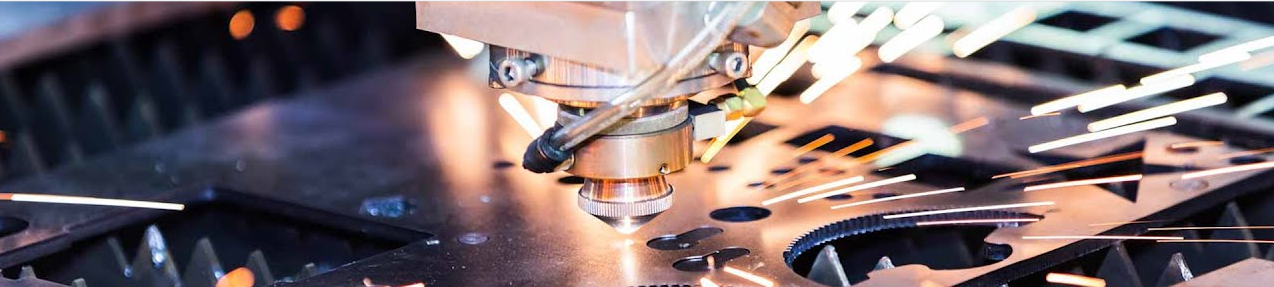
What Is the Minimum Hole Size for Laser Cutting Metal?
Time : Nov 06, 2026 View : 0
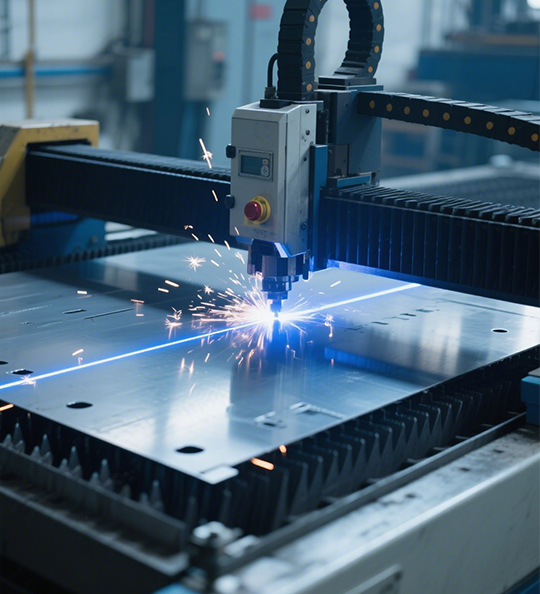
“Can you cut this hole?” leaves out half the question. For a mounting bracket, we also need to know what goes through it. A screw with clearance is one thing. A pin that has to locate another component accurately is quite another.
You might accept some size variation in an enclosure’s ventilation holes and reject the same variation around a mounting pin. So when we review a small hole, we’re looking at the metal and thickness as well as the assembly. Drilling may belong in the quote too.
What Is the Minimum Hole Size for Laser Cutting Metal?
Start at D ≥ t, with D standing for hole diameter and t for sheet thickness. In practical terms, try 3 mm or larger when drawing holes in 3 mm sheet. That’s a conservative design starting point.
It isn’t an absolute minimum. Thin sheet and suitable cutting equipment can allow smaller openings. We’d still want to review the material and the acceptable size range before agreeing to a functional hole below that guideline. A hole that cuts successfully may need more work before it fits.
What Factors Affect the Minimum Hole Diameter?
Material Thickness
Look underneath the sheet when checking a sample. On thicker stock especially, the exit diameter can differ from the opening you measured at the top because of cut taper.
Metal Type
Write “304 stainless,” for example, rather than just “metal.” Mild-steel settings won’t simply transfer across. With aluminum we’re dealing with rapid heat conduction; with brass the equipment’s suitability for reflective metals needs checking.
Laser Cutting Parameters
We’d check more than power before changing a hole size. Is the focus position right for the stock? Can the assist gas clear the melt? Laser type and a consistent kerf also affect the result.
Required Tolerance and Hole Function
A ventilation opening can tolerate variation that would spoil a locating hole. Bolt clearance and a precision pin fit also call for different acceptance limits. Name the job on the drawing.
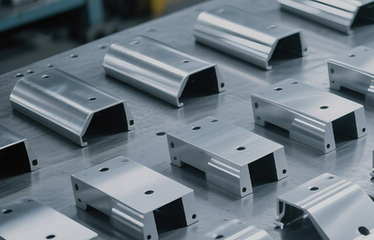
Practical Design Guidelines for Small Laser-Cut Holes
Use the Hole-to-Thickness Ratio as a Starting Point
Divide the proposed diameter by the thickness. For a 2 mm hole through 3 mm stock, D/t comes out at roughly 0.67. We’d flag that feature for discussion. Aim for 1 or above where you have room, without treating it as a machine limit.
Account for Kerf and Hole Geometry
Keep your CAD dimensions at the required finished size. For a 0.2 mm kerf, programming allows for the 0.1 mm removed on each side of the beam path. If you’ve already adjusted the drawing, tell us. Otherwise the allowance could be applied twice. Check cut taper too.
Specify Tolerances Based on Function
Suppose you’ve written 4.0 ±0.1 mm. A hole measuring 3.9 mm passes that requirement, even if your pin won’t enter it. Work out the acceptable range from the intended fit. Let us know if it’s a press fit rather than clearance for a bolt.
Check Nearby Bends and Edges
Don’t approve a hole beside a bend by measuring only the flat blank. Forming can pull it out of round. Review its edge distance and bend clearance together when arranging laser cutting and bending.
Minimum Hole Size Examples by Sheet Thickness
Using D ≥ t gives these starting dimensions:
|
Sheet Thickness |
Preliminary Hole Diameter |
|---|---|
|
1 mm |
1 mm or larger |
|
2 mm |
2 mm or larger |
|
3 mm |
3 mm or larger |
|
5 mm |
5 mm or larger |
These are conservative preliminary design references. They are not Deshibo’s minimum-hole guarantees across all materials and equipment. Smaller diameters and their tolerances require engineering confirmation.
How Material Type and Thickness Influence Hole Quality
Mild Steel and Stainless Steel
Mild steel turns up in frames and brackets as well as industrial enclosures. If an exit burr would catch on the mating part, ask for it to be removed. With stainless, inspect size as carefully as appearance. Shiny edges won’t help a pin that won’t fit.
Aluminum and Brass
Aluminum takes heat away from the cutting area readily. Its reflectivity also affects processing, so a change from steel means checking the setup again. For brass, we’d confirm machine compatibility before accepting the job. In either case, please keep the alloy and thickness on the drawing revision.
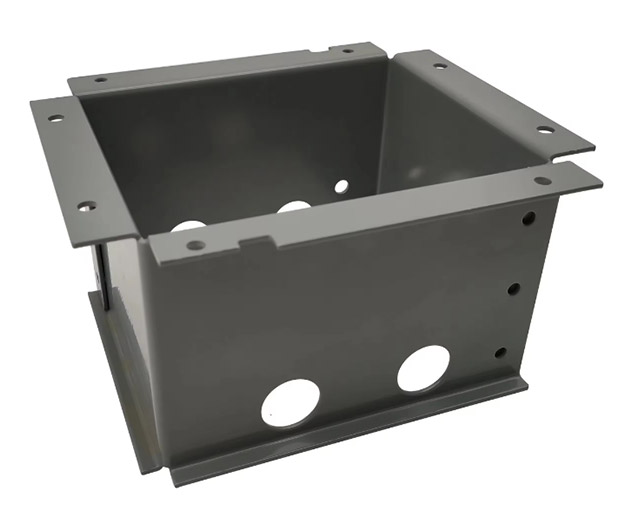
Laser Cutting vs. CNC Drilling for Small Metal Holes
|
Requirement |
Potentially Suitable Process |
|---|---|
|
Complex 2D profiles and multiple openings |
Laser cutting |
|
Conventional drilled holes |
CNC drilling |
|
Tighter hole tolerances or specific fits |
CNC machining or secondary finishing |
|
Cut profiles plus bends and welded assemblies |
Integrated fabrication workflow |
A panel with many openings may suit laser cutting. Two locating holes may still need finishing. We can review that combination through our CNC machining services. For a quote, include quantity as well as material. Diameter and tolerance determine how much work each hole needs.
Common Mistakes When Designing Small Holes for Laser Cutting
Copying a hole diameter onto thicker sheet without checking it.
Applying tight tolerances where ordinary clearance would work.
Ignoring kerf or taper because the top opening looks correct.
Leaving burr removal and finishing out of the drawing.
Placing holes near bends or edges without review.
Omitting whether a hole provides clearance or controls alignment.
A drawing review is the time to catch these. We’d rather ask about an awkward hole now than arrange avoidable rework on finished parts.
Frequently Asked Questions
Can laser cutting produce holes smaller than the sheet thickness?
Yes, in some material and machine combinations. Send the drawing so we can check. If the hole controls assembly, a sample measured against your tolerance is more useful than a photograph showing that it cut through.
Does laser kerf affect the final hole diameter?
Yes. Imagine following your CAD circle with a cut that has width: some metal disappears on either side of the path. Programming must allow for that width to produce the intended opening.
Is laser cutting suitable for precision mounting holes?
Sometimes. A clearance mounting hole may work as cut. A hole locating a pin may need drilling followed by reaming or another finishing operation. The fit requirement decides which route makes sense.
Can Deshibo manufacture custom sheet metal parts with small holes?
Yes. Send us the drawing with the material grade and thickness. Mark the small-hole tolerances and explain their function so our engineers can evaluate a suitable manufacturing route before production.
Small-Hole Design Checklist Before Production
Hole diameter and acceptable tolerance.
Metal grade and sheet thickness.
Hole function and distance from bends or edges.
Surface finish and deburring requirements.
Any secondary machining needed.
Order quantity and matching 2D/3D drawings.
Mark critical holes clearly. A short note about the mating part often resolves more than another decimal place.
Get a Quote for Your Custom Laser-Cut Metal Parts
Ready for a drawing review? Share a DXF or DWG file, or send STEP and PDF drawings together. Tell us the metal grade and thickness. With the quantity and smallest hole marked, we can assess laser cutting and any required bending or welding. Flag tight tolerances for CNC machining review.
