
How to Detect and Prevent Welding Defects in Fabrication
Time : Feb 13, 2026 View : 68
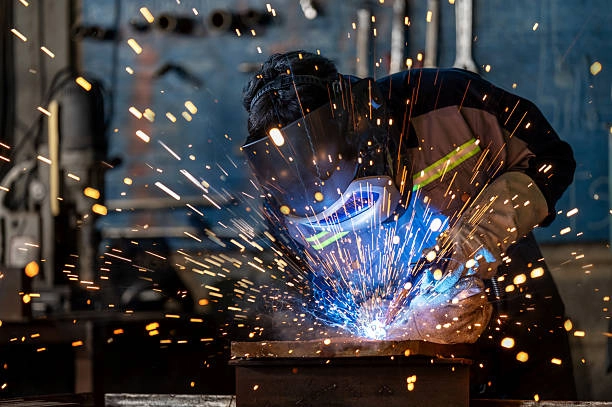
Finding and stopping welding defects matters a lot. It helps keep any welded metal structure safe, tough, and working well. You might see small surface flaws. Or big inside problems that weaken how much weight it can hold. These welding troubles often come from material features, uneven methods, or outside conditions. When folks understand what causes them and use right ways to spot them, builders and makers can cut down dangers. They can also lessen fixes. And they keep the item’s strength.
Types of Welding Defects in Fabrication
Distinction Between Welding Defects and Weld Discontinuities
Welding defects are flaws that go over okay limits set by rules and guidelines. They cause weaker builds or even breakdowns. On the other hand, discontinuities are just weird spots. These may not always mess with how things work. Defects such as undercuts, burn throughs, welding flashes, incomplete welding, and wrong edges are not allowed. This difference is key when checking weld quality in reviews.
Common Categories of Welding Defects
- Surface defects: These include cracks, porosity (gas pockets), undercuts, and spatter. For example, the diameter of pores on the weld surface shall not exceed φ1.5 mm, and there should be no more than 5 pores smaller than φ1.5 mm per 50 mm of weld length.
- Internal defects: Such as lack of fusion, slag inclusion, or incomplete penetration. Welded parts shall not have lack of fusion or incomplete penetration defects.
- Dimensional defects: Warping, misalignment, angular distortion, or uneven bead width. The angle of the welded productshall be within ±1 degree, except where otherwise specified.
Causes Behind Welding Defects
Material Related Factors
Dirt in base or filler metals often leads to trouble. Grease and dirt on the welded parts can spark defects. If you don’t clean them off well before starting, they make pores and cracks in the weld as you go. Materials that don’t match up can lead to weak metal links too. Or they crack while cooling down.
Process Parameters and Technique Errors
Wrong heat levels or moving speeds can create cold laps or burn through. Too much power and slow pace cause poor fusion and burn through. In the same way, bad joint setups or not enough angle in grooves hurt how well things join.
Environmental and Equipment Influences
Dirty pieces, like those with rust or oil, set up for porosity. If the piece has water or stuff that pulls in moisture, pores might stay trapped. That happens too if the welding power is too weak. Bad torch settings or old electrodes can make arcs unsteady. And that messes with how deep it goes.
Detection Methods for Welding Defects
Visual Inspection Techniques
This acts as the starting shield. With enough light and tools to zoom in, checkers hunt for outer problems. Things like cracks, porosity, and odd bead shapes. All welds should undergo visual inspection, and grinding of the welds with a flap disc after welding is permitted.
Non-Destructive Testing (NDT) Methods
- Ultrasonic Testing (UT): Effective for identifying internal voids or lack of fusion.
- Radiographic Testing (RT): Offers highresolution imaging of weld interiors.
- Magnetic Particle and Dye Penetrant Testing: Best for detecting surface cracks on ferromagnetic materials.
Destructive Testing Procedures
In some spots, cut and etch (macro etching) or bend tests help judge weld strength. You can use sampling ways to check how welded joints perform. That includes their mechanical traits.
Strategies to Prevent Welding Defects During Fabrication
Pre-Weld Preparations and Material Handling
Cleaning is something you must do. Oil, rust, and oxide films must be removed from the surface within 20-50 mm on both sides of the weld joint or bevel. Pick materials that fit the joint plan and use. For example, use right alloy rods for aluminum TIG welding.
Process Control During Welding Operations
Follow the Welding Procedure Specification (WPS). Choose good welding settings to cut heat input. Like making the groove gap smaller and using deep penetration welding. Training for operators is important too. Uneven methods often start defects.
Post Weld Quality Assurance Measures
Treatments to ease stress cut down leftover tensions. Those could lead to cracks down the road. Last checks make sure it fits build rules. The control group welding diagrams and part drawings are checked to verify that there are no missing, omitted, or incorrectly welded parts, and that the surface flatness and diagonals meet the drawing requirements.
Role of Welding Techniques in Minimizing Defects
Characteristics of MIG, TIG, Spot, and Robotic MIG Welding
- MIG welding: Fast and economical—ideal for carbon steels. O2 welding offers high production efficiency, low energy consumption, low cost, and strong rust resistance.
- TIG welding: Offers precision for thin metals and aluminum alloys. TIG welding has the advantage of good welding quality and can weld non-ferrous metals such as aluminum and magnesium alloys.
- Spot welding: Perfect for sheet metal assemblies under 6mm thick.
- Robotic MIG: Enhances repeatability and reduces human error—an area where precision fabricators like Deshibo shine.
As a precision metal fabricator specializing in custom sheet metal work, CNC machining, laser cutting, bending, and welding services, Deshibo integrates advanced equipment and process control to deliver consistent weld quality across varied industrial applications.
Importance of Adhering to Fabrication Standards
Implementation of Welding Procedure Specifications (WPS)
Sticking to a clear WPS keeps things steady. It stops skipped welds, unfinished ones, and wrong seams. So you build as per the plans. It matches ways with rules like AWS D1.1 or ISO 3834.
Welder Qualification Requirements
Certifications show a worker’s skill in doing certain welding jobs in real setups. Regular rechecks help keep top levels through making rounds.
Benefits of Professional Welding Services in Industrial Fabrication
Advantages of Outsourcing to Certified Fabricators
Teaming up with Deshibo lets you get skilled workers, managed spaces, and auto systems. This leads to less flaws and cheaper fix costs.
Impact on Project Efficiency and Structural Reliability
Less check fails mean less hold ups. And if your builds start with solid weld strength, the full item holds up better over time.
FAQ
Q1: What’s the most common cause of weld porosity?
A1: Moisture or oil on the base metal brings in gases during welding. Those form pores.
Q2: How do I know if my weld has cracks without cutting it open?
A2: Try dye penetrant testing for outer cracks. Or ultrasonic testing for inside ones.
Q3: What’s the ideal weld technique for aluminum?
A3: TIG welding gives great control. It fits best for aluminum alloys.
Q4: Can robotic welding fully eliminate defects?
A4: Not all the way. But it cuts changes a lot and boosts steadiness in repeat jobs.
Q5: Why should I care about post weld heat treatment?
A5: It eases leftover stress. That might cause cracking or size shifts otherwise.
