
5 Types of Welding Joints: Butt, Lap, T, Corner and Edge Explained
Time : Mar 13, 2026 View : 29
Welding joints form the backbone of metal fabrication. Whether you’re working on structural beams, automotive panels, or precision sheet metal parts, the type of joint you choose determines the strength, appearance, and durability of your weld. The right joint design reduces distortion, improves load distribution, and simplifies production — essential factors in industries that rely on high quality welds.
Understanding Welding Joints
Definition and Purpose of Welding Joints
Welding joints are the configurations where two or more metal pieces are fused together. The welding process’s essence is to bring two separate metal surfaces close enough at an atomic level to form metallic bonds, achieving a unified structure. Their purpose is to create a continuous connection capable of transmitting loads without failure.
In fabrication and construction, proper joint design ensures dimensional accuracy and minimizes stress concentration. Welding structure design should minimize welding volume while ensuring strength and control deformation by arranging welds symmetrically when possible.
Butt Joint
Characteristics of Butt Joint
A butt joint connects two pieces end to end in the same plane. It’s common in pipelines, tanks, and sheet metal assemblies where alignment is crucial. For thin materials, single sided welding is often sufficient; thicker sections may require double sided welding for full penetration.
| Material Thickness (mm) | Recommended Weld Type | Gap (mm) |
| 1–3 | Single side weld | 0–1.5 |
| 3–6 | Double side weld | 0–2.5 |
For sheets 1–3 mm thick welded on the same plane, a one side weld with a gap of 0–1.5 mm is generally used.
Advantages of Butt Joint
Simple to design and execute with MIG or TIG processes.
Provides smooth surfaces suitable for grinding or finishing.
Works well with multi process welder setups for different materials and thicknesses.
Disadvantages of Butt Joint
Requires precise edge preparation to avoid incomplete fusion.
Misalignment can lead to weak joints or uneven penetration.
Lap Joint
Characteristics of Lap Joint
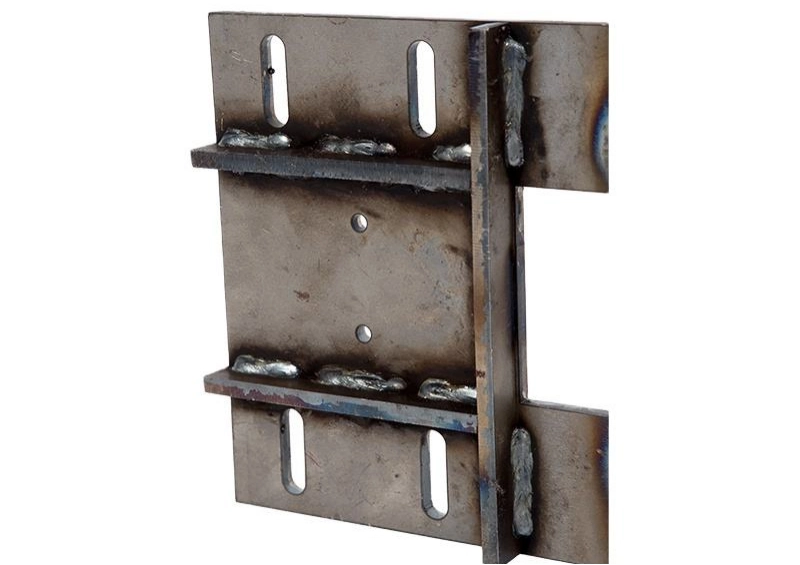
Lap joints overlap two plates partially before welding along their edges. They’re widely used in automotive bodywork and sheet metal fabrication where spot or fillet welds are applied.
Advantages of Lap Joint
-
Creates a strong overlapping bond ideal for thin sheet structures.
-
Effective for joining dissimilar thicknesses using MIG welding techniques that control heat input.
Disadvantages of Lap Joint
Consumes more material due to overlap area.
Moisture trapped between layers may cause corrosion over time — something every welder keeps an eye on during inspection.
T-Joint
Characteristics of T-Joint
A T-joint forms when one plate is positioned perpendicular to another, resembling the letter “T.” It’s common in structural frames and brackets.
Advantages of T-Joint
Excellent load bearing capacity due to its geometry.
Compatible with various methods such as CO₂ gas shielded welding or TIG welding depending on thickness.
In T-shaped seam welding between 1–6 mm thick parts, double sided welding is usually adopted with a seam gap between 0–2 mm.
Disadvantages of T-Joint
May distort if heat input isn’t balanced; tack welds are often used to stabilize components.
Welding thicker materials can be challenging without proper preheating.
Corner Joint
Characteristics of Corner Joint
Corner joints connect two members at right angles forming either an open or closed corner — typical in box frames or enclosures.
Advantages of Corner Joint
Provides structural integrity at corners while maintaining shape accuracy.
Suitable for both internal and external corners; easy to finish after grinding.
Disadvantages of Corner Joint
Often requires additional finishing work to achieve clean edges.
Without support fixtures, warping may occur during cooling.
Edge Joint
Characteristics of Edge Joint
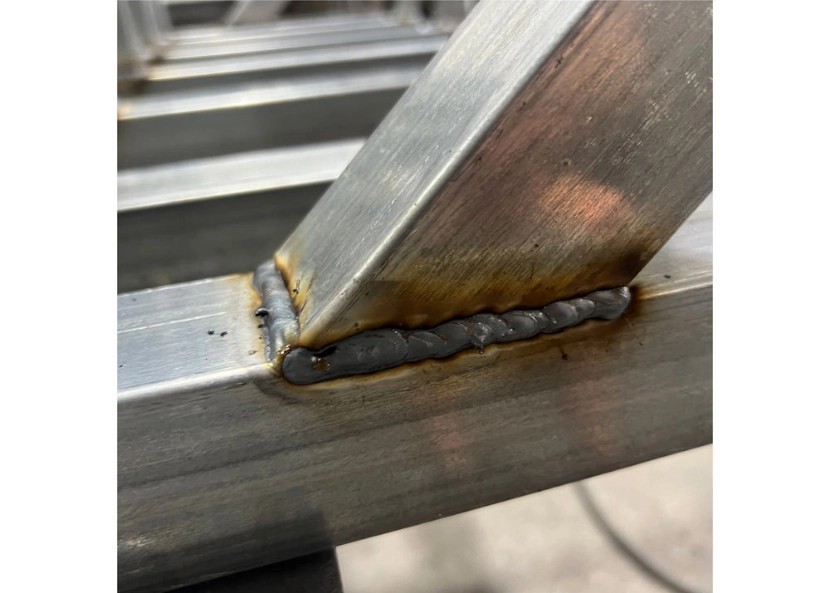
Edge joints fuse the edges of parallel plates lying side by side — common in sheet metal fabrication for lightweight structures or covers.
Advantages of Edge Joint
Ideal for joining thin sheets where full penetration isn’t required.
Economical use of material since no overlap is needed.
Disadvantages of Edge Joint
Limited mechanical strength compared with butt or lap joints.
Not recommended for high stress applications like pressure vessels.
Choosing the Right Welding Joint for Your Project
Selecting the correct joint depends on:
Material type and thickness – Thin sheets favor lap or edge joints; thicker sections benefit from butt or T-joints.
Load requirements – Structural parts carrying heavy loads need full penetration welds.
Distortion control – To control welding deformation, weld seams should be arranged symmetrically whenever possible.
Accessibility – Ensure there’s enough space around each seam for quality inspection and rework if needed.
Deshibo, a professional metal manufacturer specializing in custom sheet metal fabrication, CNC machining, laser cutting, bending, and welding services, often assists engineers in optimizing joint selection based on these criteria during project planning phases.
Explore Our Full Service Sheet Metal Fabrication
Deshibo provides full service sheet metal fabrication covering everything from prototype development to mass production welding sheet metal assemblies using advanced MIG welding techniques and multi process welder systems that handle stainless steel, aluminum, and carbon steel efficiently. The company’s engineering team emphasizes precision alignment and minimal distortion following industrial standards similar to those outlined in national technical specifications like GB324‑88 for weld symbol representation.
FAQs
Q: What’s the strongest type of welding joint?
Generally, a properly executed butt joint offers maximum strength because it allows full penetration across the section.
Q: Which joint is best for thin sheet metal?
Lap joints work best since they reduce burn‑through risk while maintaining sufficient bonding area.
Q: How do I prevent distortion during MIG welding?
Use tack welds first and alternate sides when applying heat — symmetry helps balance stresses.
Q: Can different metals be joined using these joints?
Yes, but filler selection and heat control are critical when joining dissimilar metals like steel and aluminum alloys.
